

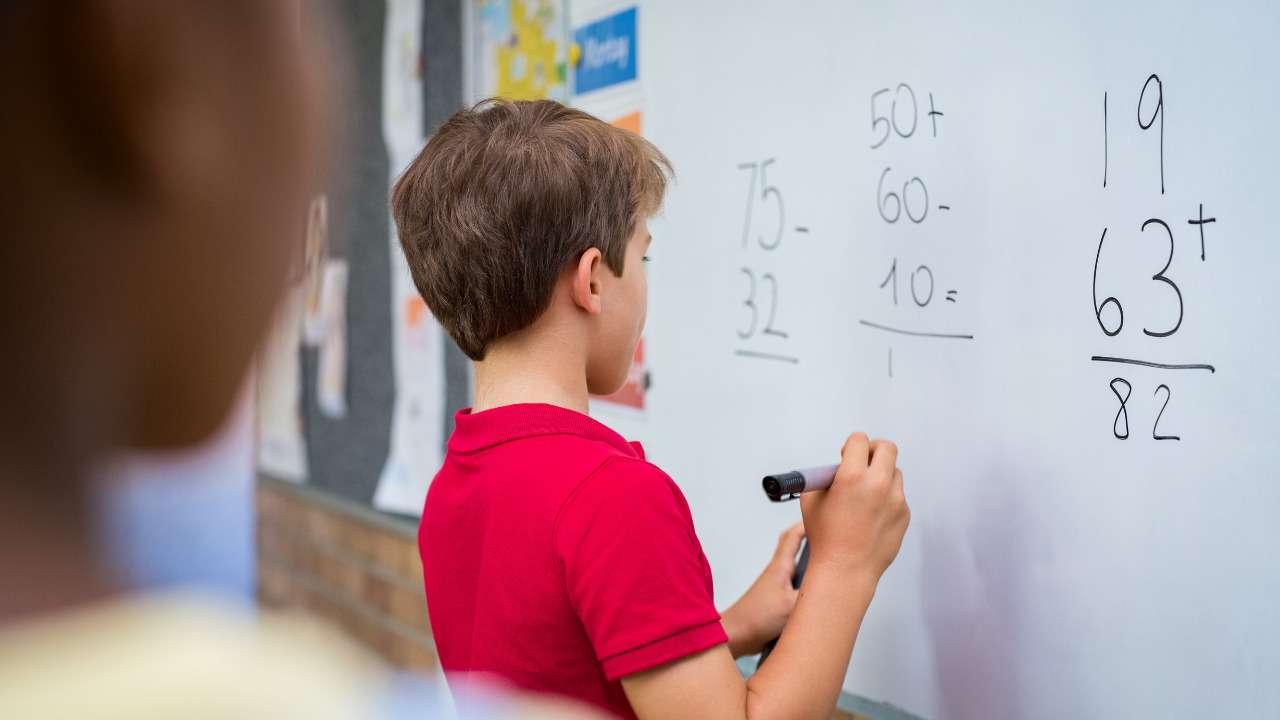
Have you ever wondered why some students seem to solve tricky math problems so easily, while others get stuck halfway?
The secret often lies in something called math heuristics — smart problem-solving strategies that help students think clearly, organise information, and find the best way to a solution.
In Singapore, math heuristics are an essential part of the problem-solving process taught in schools. They are not shortcuts or “cheat codes”, but thinking tools that help students break down problems systematically.
So, whether you’re tackling word problems, before-after concept questions, or trying to look for patterns in a figure number question, heuristics can be your best friend.
In this article, we’ll explore 7 simple strategies that every primary school student can use to solve problem sums easily.
Understanding What Math Heuristics Are
Before jumping into examples, let’s answer the question: what are math heuristics?
In simple terms, heuristics are thinking skills or strategies students can use to solve unfamiliar math problems. They guide you on how to think rather than what to memorise.
The Ministry of Education (MOE) in Singapore includes heuristics as part of the PSLE Mathematics syllabus because they build reasoning and logic — skills that go far beyond the exam room.
For example, if you’re trying to find the total number of sweets Peter had at first, you might use model drawing, guess and check, or even work backwards depending on what information is given.
Each heuristic is like a tool in a toolbox, and the more tools you have, the more confident you become when facing challenging math questions.
1. Draw a model or diagram
One of the most effective heuristics in Singapore Math is model drawing. It’s the perfect approach for visual learners who like to “see” the problem before solving it.
When faced with complex word problems, drawing a diagram or bar model helps to represent relationships clearly.
For instance, if the problem says “Peter had twice as many marbles as John at first,” a bar model instantly shows the ratio and makes it easy to see how much one has compared to the other.
This method also works well for the before-after concept, such as:
“At first, Peter had 30 sweets. After giving some to Jane, he had 12 left. How many did he give away?”
By representing the situation visually, students can see the difference immediately instead of struggling to form equations.
Model drawing is not just a strategy; it is a foundation of Singapore math education. It trains students to translate words into visuals, a key thinking skill for both lower and upper primary levels!
2. Look for patterns
Another powerful heuristic is to look for patterns in the problem. Patterns are everywhere in mathematics: number sequences, shapes, or even logic puzzles.
For example, imagine this question:
“The first figure has 3 dots. The second figure has 5 dots. The third figure has 7 dots. How many dots are there in the 10th figure?”
Instead of listing all the figures, notice the pattern! The number of dots increases by 2 each time. Once you look for patterns, you can find a formula and predict any term in the sequence easily.
This heuristic helps students develop analytical thinking skills, especially when solving PSLE pattern problems or figure number questions. By recognising regularities, it allows you to predict what comes next without tedious counting.
Encourage your child to ask questions like:
- What is changing each time?
- How many are added or removed?
- Can I describe this in a simple rule?
Your child learns to see structure in chaos — a hallmark of good mathematical thinking.
3. Work backwards
The work backwards method is a classic heuristic often seen in problem sums where the final result is known, but the initial quantity is hidden.
For instance:
“After spending $24, Peter has twice as much money left as he had at first. How much did he have at first?”
This type of question can be confusing if approached directly. However, by working backwards, you start from the known end point and reverse each operation step by step.
This heuristic helps children strengthen their logical reasoning and understanding of inverse operations. It also mirrors real-life problem-solving such as, retracing your steps to find a misplaced item.
In the PSLE, questions involving multiple operations or “reversing” actions can be solved efficiently by applying this strategy.
4. Simplify the problem
When a question seems too complicated, it helps to simplify the problem first. It’s an excellent strategy that teaches students to break down complex math questions into smaller, easier parts.
For example:
“The ratio of boys to girls in a class is 3:2. If 10 boys join, the ratio becomes 4:3. How many boys and girls were there at first?”
Instead of jumping into equations, simplify the problem by using smaller numbers or test simple ratios to see the relationship. This step-by-step approach makes even the toughest ratio questions manageable.
Once simplified, it helps students understand the process of solving rather than rushing to get the answer. It builds patience, clarity, and a deeper understanding of how numbers work together.
5. Make a table or a systematic list
Sometimes, the best way to solve a problem is by organising information into a table or a systematic list.
For instance, when you’re asked:
“How many three-digit numbers can be formed using the digits 1, 2, and 3 without repeating them?”
By listing the combinations systematically, you avoid missing any possibilities. This heuristic encourages neatness, structure, and logical sequencing — essential skills for problem-solving in Singapore Math!
Tables also make it easy to act it out and visualise patterns, especially in combinatorics or number of outcomes problems.
When students make a table, they develop good habits of organisation, which are crucial not only for exams but also for real-world situations where data must be interpreted clearly.
6. Guess and check — the smart way
Many students are familiar with the guess and check method, but few use it effectively. The whole concept isn’t about random guessing, but about making an educated guess, checking your answer, and refining it logically.
For example:
“The sum of two numbers is 30. One number is 6 more than twice the other. What are the two numbers?”
Start by guessing a small number for the smaller value and check whether it fits the condition. Through a few iterations, you’ll find the number that satisfies the problem.
This heuristic is useful for non-routine word problems where other strategies might not apply directly as it encourages students to think critically and evaluate whether their assumptions make sense.
The guess and check strategy builds resilience and persistence, which are essential qualities for young learners who often feel frustrated by tricky problem sums.
7. Practice heuristics in everyday situations
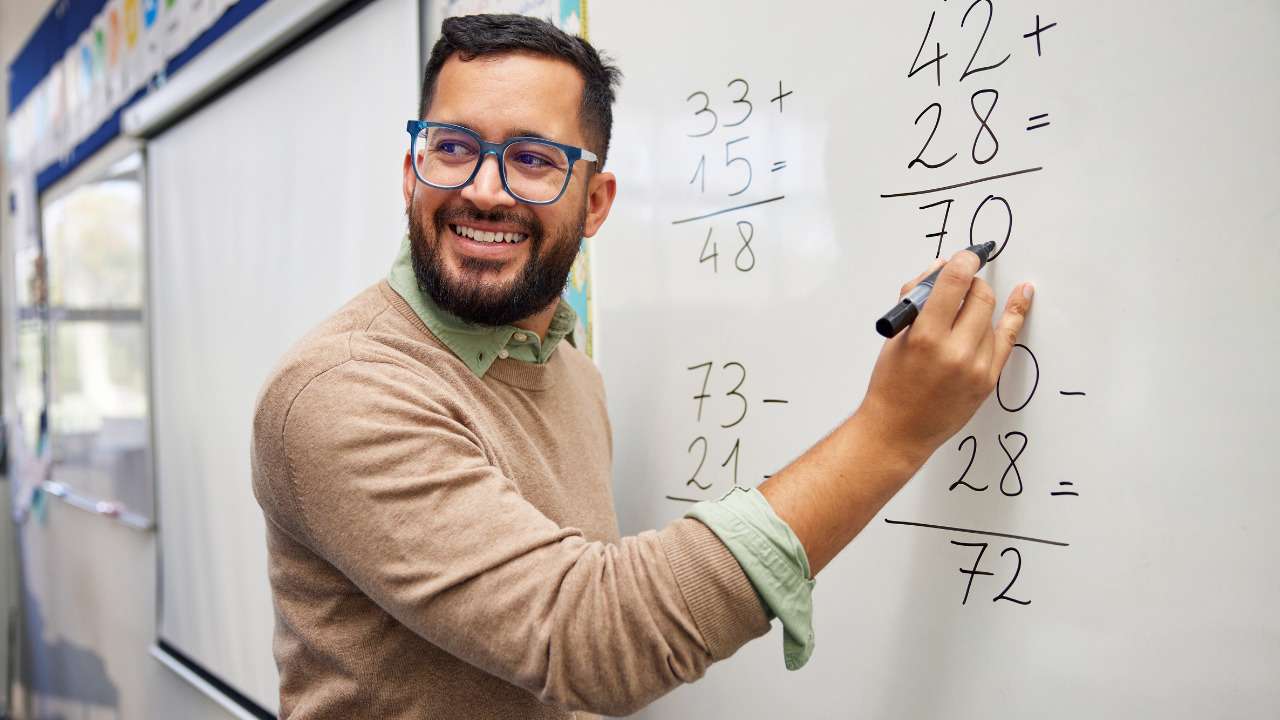
Encourage your child to apply math heuristics beyond worksheets and assessment papers. The more they use these strategies in daily life, the more naturally they will apply them during exams.
For example, when planning a family budget, ask your child to draw a simple model to compare expenses.
When spotting number patterns on a calendar, challenge them to describe the rule.
When estimating grocery totals, let them make an educated guess and check their reasoning.
The key is helping your child recognise which strategy to use and why it works. Strong learners do not simply memorise methods — they understand when to apply model drawing, when to look for patterns, and when to work backwards.
With consistent, guided practice, heuristics become thinking habits. And once that happens, multi-step problem sums feel less intimidating because your child knows how to approach them calmly and systematically.
Build Confidence through Math Heuristics
At the end of the day, math heuristics is all about developing the ability to think, reason, and approach any challenge with confidence.
When students draw models, look for patterns, or work backwards, they are strengthening their thinking skills and learning how to make sense of complex math problems step by step.
These strategies teach children that mathematics is not just about memorising formulas, but about understanding relationships, logic, and creative problem-solving.
With consistent practice, your child will soon see that even the toughest problem sums can be solved through patience, structure, and the right heuristic tools.
If your child struggles most with word problems, you might also enjoy reading our related article: How to Solve Problem Sums: 7 Proven Tips for Word Problems, a helpful next step in mastering the art of problem-solving.
Turn Strategies into Stronger Thinking with The Nuggets Academy

At The Nuggets Academy, we believe every child can learn to love math once they understand how to think through the problems clearly.
Our lessons focus on building strong foundations in Singapore Math, nurturing confidence, and applying heuristics in the problem-solving process effectively.
Our tutors guide students using proven methods such as model drawing, guess and check, and act it out, helping them turn abstract concepts into real understanding. Through small-group coaching and interactive lessons, we ensure each child gets the personalised attention they need to excel.
Explore our specialised programmes like the Problem Sums Masterclass and PSLE Maths Tuition, all designed to equip students with practical strategies to handle even the toughest PSLE math questions confidently.
Additionally, we also offer engaging lessons in English, Science, and Mathematics, each crafted to strengthen your child’s thinking skills and prepare them for academic success!
Contact us today to book a trial class!