


One of the best gifts you can give your child is a book they cannot wait to return to.
A story they have chosen for themselves can feel like a small adventure of their very own, and sharing it with you makes it even better.
Building good reading habits is less about page counts and more about curiosity, comfort and a routine that suits your family. When reading feels enjoyable rather than compulsory, children are more likely to return to books on their own.
These eight actionable strategies make books inviting, easy to reach and part of everyday life, and they can grow with your child through a whole life of reading.
Help Your Child Find Books They Enjoy
Enjoyment is the best starting point, so let’s begin with the books themselves.

1. Let their interests guide the choice
It sounds simple, but children read more willingly when a book feels like their own rather than someone else’s agenda.
Instead of a towering pile, offer 2-3 suitable books and keep an open mind about what counts: comics, illustrated nonfiction, short stories and chapter books all belong.
Choosing between two books is also small practice in decision making. When given a say and matched with a book that interests them, children are more likely to be motivated to read them.
A child fascinated by insects might pick an illustrated bug guide one week and a story about a tiny garden explorer the next.
Over time, gently stretch across a broad subject matter area, from animals to space, and for confident readers, Harry Potter can be a thrilling next step. Choose books that offer a little challenge without being so difficult that your child loses interest or confidence.
Reading widely brings new vocabulary along for the ride. If your child binge-reads a favourite series, enjoy it with them, because staying with a story keeps the plot’s momentum and emotional pull going.
If your child skips ahead to exciting scenes, use it as an opportunity to talk about what happened in between. A friendly question such as “What do you think happened before this part?” can encourage them to follow the story more closely without turning reading into a test.
If their books spark questions about how nature works, you can explore those interests further through everyday experiments, nature walks or age-appropriate science activities.
Make Reading Easy to Start
Once the books are chosen, make them simple to pick up and enjoy.
2. Keep books within reach in a comfortable spot
Keeping reading obvious is half the battle, and there are a few ways to do it.
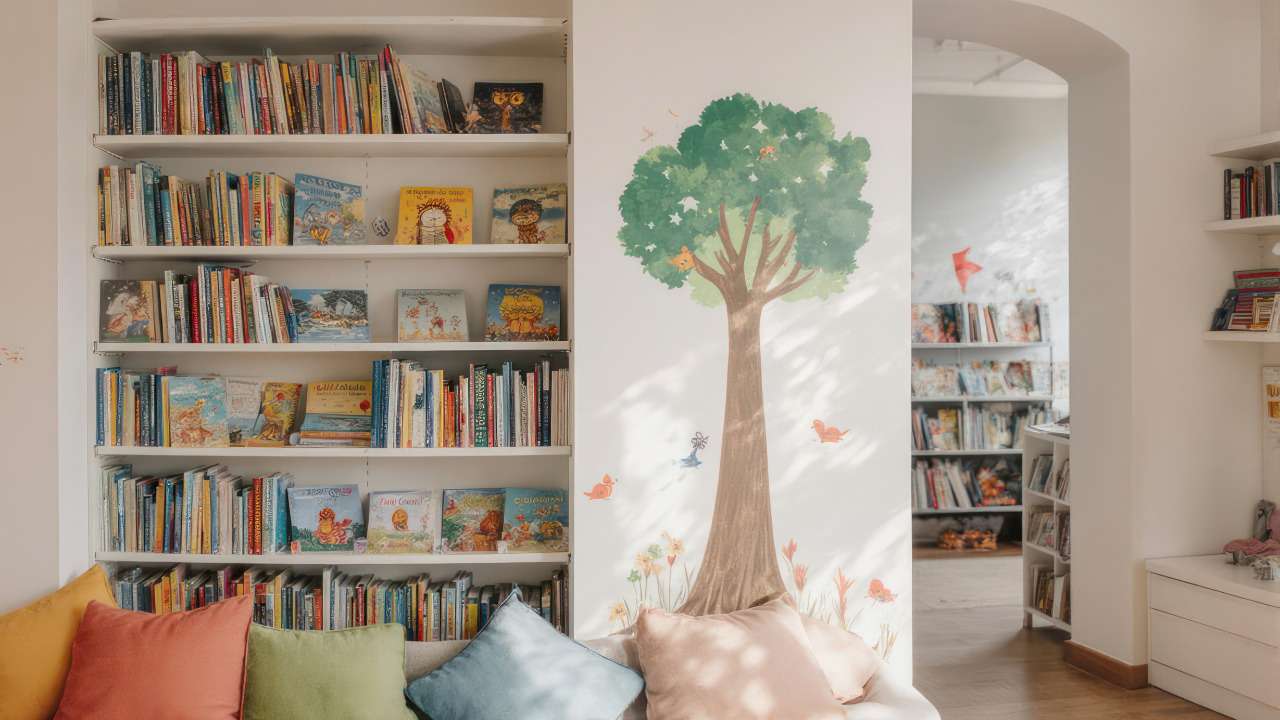
Choose the most obvious location for a small selection, at your child’s height, such as beside the sofa, near the school bag or on a bedside shelf, and turn a few covers outwards. Making books visible and accessible gives children more opportunities to pick one up without needing to ask.
The more obvious the cues, the more often a book gets picked up: leave tomorrow’s choice on the pillow, a book waiting just for them, or slip one into your bag for a coffee shop visit.
Comfort is a crucial factor too. A reading space does not need to be a sacred space, a special reading chair or a separate room.
Designate a cosy reading nook instead, with a blanket and a lamp, so your child builds positive associations with that spot. A cushion, a beanbag with legs sticking out or even the living room floor will do.
Think about distractions as well. Switch off all the social media, put the TV away, and silence unnecessary notifications during reading time. A quieter environment makes it easier for children to concentrate on the story and discuss what they have read.
If your child prefers digital books, choose a reading app or e-book without unnecessary notifications, pop-ups or interactive distractions. You can also encourage them to try printed books, which make it easier to focus on the story without being interrupted by other screen features.
Fit the Habit of Reading Into Your Family Routine
A small, flexible routine turns good intentions into a regular habit.
3. Link reading to something you already do
For busy lives, the easiest routine piggybacks on something that already happens. This is known as habit stacking. James Clear explores the approach in Atomic Habits and credits researcher BJ Fogg for the underlying idea of anchoring a new behaviour to an existing habit.
Once the school bag is packed, for instance, you and your child share a short book or a chapter.
Some families prefer a morning routine, with a few pages over breakfast, before the inbox starts overflowing and responsibilities creep in.
Others enjoy bedtime, since the day tends to fill up and evenings can be rushed.
The American Academy of Pediatrics offers “brush, book, bed” as one practical sequence, but bedtime is only one option. The best reading routine is the one your family can maintain comfortably. We suggest developing one anchor that suits your particular context, ideally tied to a particular place, such as the sofa after dinner, with a fallback for hectic days.
If you miss a session, simply resume the next day! A new habit of reading grows from repeating something enjoyable, and a regular slot lets each session pick up where the last one left off.

4. Start with a small, flexible goal
Starting small keeps reading from feeling like another chore. For example, one page or a few pages a day is a gentle starting line; and for a younger child, a short shared section where you do most of the reading will do.
If your child wants to carry on, wonderful, but avoid raising the target each time, and never compare page counts between children.
There is no magic number of days for a habit to settle, as habit formation varies from person to person.
After a few weeks, check in together: do the time, the book and the amount still suit everyone? Treat this as continuous improvement, not perfection, because small adjustments lead to better habits than a strict plan.
Notice which parts of the routine your child looks forward to, whether it is choosing the next book, reading in a favourite spot or sharing a story with you. These positive associations can make it easier to keep the habit going.
The ultimate outcome is a child who picks up a book by choice, not one who hits a target.
Make Reading Something to Share
Books come alive when they are read, discussed and enjoyed together.
5. Read aloud and revisit favourite stories
Reading aloud does not have to stop once your child can read alone. You can continue sharing stories with school-age children by taking turns reading, listening to them read or choosing a book that you enjoy together.
You can take turns with paragraphs, try funny voices and choose stories that make children laugh out loud. These shared moments also give children opportunities to hear how words are pronounced, discover new expressions and enjoy stories with someone they trust. Whatever shared reading does for cognitive development, what children feel most is closeness and fun, and a repeated phrase they can join in with makes reading satisfying.
If your child asks for the same story again, welcome it.
Research involving three-year-old children found that hearing the same story repeatedly helped them remember and retain new word-object associations better than hearing different stories containing the same new words. Rereading can therefore give young children more opportunities to become familiar with vocabulary and story details.
Audiobooks solve a practical problem on long journeys or when your voice needs a rest, and your child can follow the printed book while listening, a method known as audio-assisted reading.

6. Let your child see you reading
Children imitate adults and learn to read as fun. The American Academy of Pediatrics recommends modelling good reading behaviour as a way to encourage children to develop an interest in books.
So spend time reading something you genuinely want to read, whether it is a novel, a magazine, a hobby guide or a recipe collection. This way you are showing them that books are for curiosity, fun and accumulating wisdom.
If you read on a device, say what you are doing, such as “I’m reading about growing herbs”, so your child knows you’re not checking messages or scrolling through your social media feed.
You can also bring reading into everyday activities. For example, while cooking dinner ask your child to read out a recipe step or help you follow written instructions, provided they can do so safely and away from heat and sharp tools.
Remember, reading does not have to compete with fun: families can play video games or watch Netflix on some evenings and still make room for books on others.
7. Talk about the book, not just the words
Feeling heard is one of the greatest human desires, and book talk gives your child that. Try two simple prompts: “Which part surprised you?” and “What would you have done differently?”
Treat their answers as personal reactions rather than right-or-wrong responses, and encourage your child to explain what made them think that way. Let them retell an event in their own words or pick a key line to read aloud.
Comparing a character’s choices invites critical thinking, while asking how a character feels is a gentle route to promoting empathy.
Pausing to predict, question or retell is a kind of active reading, and it helps children stay engaged and think for themselves. You can also revisit the story the next day and ask your child to recall a favourite scene or explain what happened. This gives them another opportunity to remember and make sense of what they read.
Parents may think first of academic success, but the crucial task at this age is enjoyment, which makes talking about books naturally feel like a treat.
If your child consistently struggles to understand passages, identify key details or express ideas in writing, consider speaking with their teacher to identify where they need support.
For more on exploring unfamiliar words, read How to Improve Vocabulary: 7 Ways to Increase English Vocabulary.

8. Visit the library and find reading buddies
You do not need more money to build a rich book collection when you can borrow. Let your child browse, choose and ask the librarian, one of the wise people to turn to for recommendations.
Many libraries also run story or reading programmes. In Singapore, the National Library Board’s children’s pages share reading resources and programme listings, though some events have age ranges or require registration.
Reading buddies add a social spark. An informal book club with a sibling, cousin or friend can be as simple as swapping favourite pages or drawing a character.
A reading buddy gives your child someone to share recommendations and discuss stories with. They do not need to enjoy the same books or read at the same speed. Keep it optional, since sharing books and reading with friends can make the activity more enjoyable and social.
Trading recommendations is also what regular readers do, and it helps children see themselves that way.
Match the Support to Your Child’s Needs

Even with lovely routines, some children find reading harder than others. Rather than assuming your child lacks motivation, notice what makes it difficult.
If starting is the obstacle, change one practical detail: the time, the book, the length or the place. If your child enjoys listening but repeatedly struggles to read words accurately, speak to their teacher. If the words come smoothly but the meaning feels unclear, raise comprehension and vocabulary instead.
Reading Rockets explains that children may find word reading, comprehension or both difficult, so pay attention to the specific difficulties your child experiences. For example, notice whether they struggle to recognise words, follow the sequence of events or explain what a passage means. Sharing these observations with their teacher can help identify the support they need.
In the meantime, keep sharing stories. Good reading habits and targeted support work best side by side.
Give Your Child the Support to Grow as a Reader at The Nuggets Academy
Enjoying books at home can sit comfortably alongside guided help with understanding and using English.
For families wanting that extra support, The Nuggets Academy offers small-group English lessons that cover comprehension and writing through bite-sized, step-by-step teaching.
Whether your child needs help unpacking comprehension passages or expressing ideas in writing, small-group coaching of up to six students per tutor keeps the focus on each learner.
If you are unsure which area your child needs most, there’s no pressure to have all the answers first.
Contact us to talk through your child’s learning needs and find a sensible next step.