


Your child knows the scene: pen in hand, staring at a blank composition page, searching for a word beyond “nice” or “happy” or “sad.”
Or maybe it’s the comprehension paper — they understand the passage, but struggle to express their thoughts clearly because the right words don’t come easily.
These are common reasons primary students lose marks in English, and more often than not, it comes down to one thing:vocabulary.
The good news is that vocabulary is a skill that can be built. This article breaks down 7 practical ways to do exactly that!
Whether you’re a student ready to level up or a parent looking to support your child move past basic words, these strategies are simple enough to start today.
Simple But Powerful Ways to Build Your Vocabulary
These strategies work best when they become part of your everyday routine. The goal isn’t to memorise hundreds of words overnight, but to build steady habits that grow your vocabulary over time!
1. Read every day to discover new words

When you read, you encounter new words in context — not just their definitions, but how they actually work in a sentence.
Short stories, magazine snippets, or even online articles all count as meaningful practice.
The key is to start small and stay consistent. Even 15–20 minutes a day builds steady exposure to new words in manageable, digestible chunks!
This kind of short, focused habit is far more effective than forcing longer reading sessions too soon.
It’s the same principle behind our primary English classes: structured in bite-sized, manageable segments designed for consistent real progress over time.
2. Build your personal word bank

One of the simplest ways to grow your vocabulary is to keep track of it.
Every time you come across a new word — in class, during reading, or even in conversation — add it to a dedicated notebook. Over time, this becomes your personal word bank: a growing collection of words you’ve actually encountered and can revisit anytime.
The goal here isn’t perfection, but consistency. A few words a day quickly adds up, giving you a solid pool of vocabulary to draw from when it matters.
Once you’ve built your word bank, the next step is learning how to use those words naturally — that’s where the next tip comes in.
3. Learn new words through real usage

Collecting words is only the first step. To actually use them well, you need to see how they work in context.
When you learn a new word, try this simple habit: look it up, find a sentence that uses it, then write your own sentence with it. Read both aloud.
A definition tells you what a word means, but a sentence shows you how it behaves.
Take the word “brilliant”. It can describe a person, an idea, or even light — and the intended meaning only becomes clear when you see it used in context.
This approach trains you to recognise not just meaning, but usage — which is exactly what improves both composition and comprehension. At its core, the goal isn’t to memorise more words, but to actually own the ones you learn.
4. Use flashcards and vocabulary apps
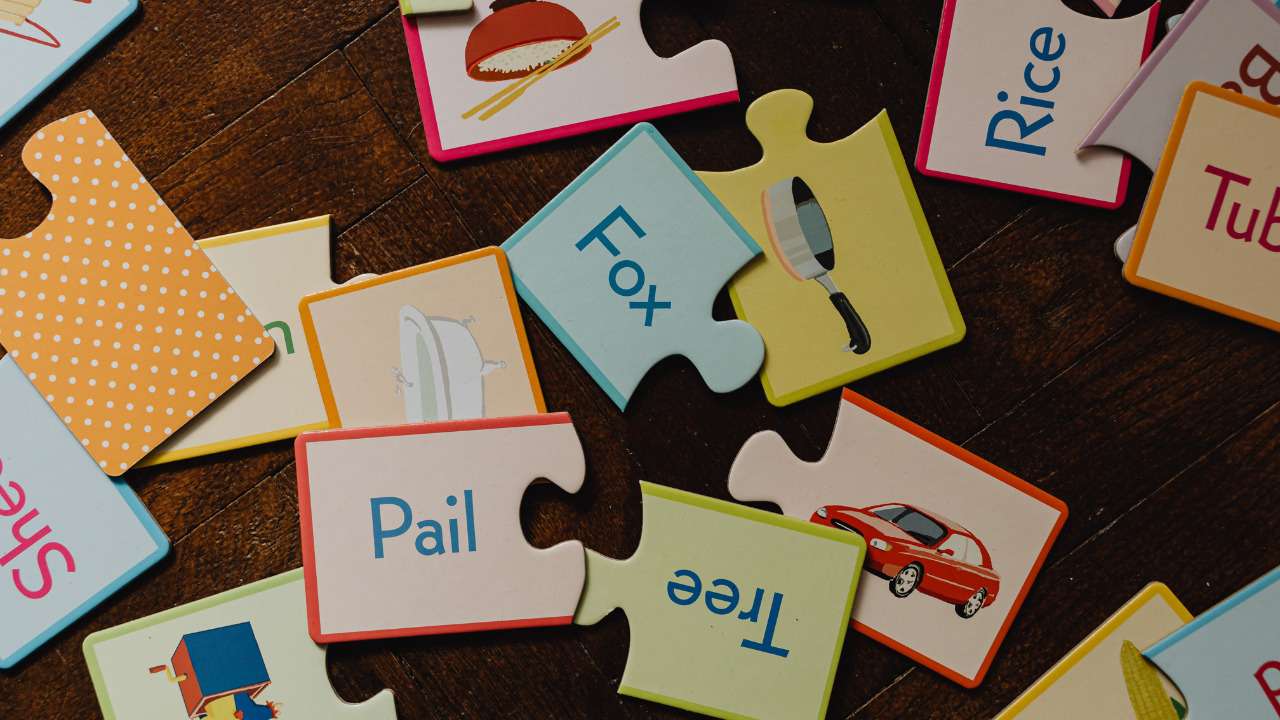
Flashcards are a tried-and-tested way to practice vocabulary, and digital apps have made them even easier to use.
Apps like Quizlet let you build your own sets of words, complete with sentences, definitions, and even images — making practice more engaging and interactive.
What makes flashcards effective is simple: they force you to test yourself.
Instead of just rereading a list of words, you look at a word and try to recall its meaning — or see the meaning and try to recall the word. That small effort of pulling the answer from memory is what helps it stick.
In other words, testing yourself works better than just reviewing.
If you want to strengthen this even further, our Brain Train Programme — researched and developed by A*STAR — focuses on enhancing memory and retention, focus and attention span, cognitive flexibility and processing speed, and decision-making and problem-solving skills.
The stronger these foundations are, the faster new words stick.
Either way, the rule remains the same: short, consistent practice each day is far more effective than one long session at the end of the week.
5. Reinforce vocabulary through games

Learning doesn’t always have to feel like study.
Word games like Scrabble, Boggle, crossword puzzles, and word-search tools are excellent ways to strengthen vocabulary skills while having fun.
They push students to think about spelling, meaning, and word patterns under light pressure — similar to how they need to think during exams.
You can also turn this into a quick daily challenge: form as many words as possible from a set of letters, or quiz each other on a “word of the day”.
Done consistently, these small, low-effort activities help strengthen recall without feeling forced — which is often why they work.
6. Use English content as passive exposure

Screen time can support vocabulary — if used with some intention.
Watching English shows, YouTube videos, or documentaries with English subtitles exposes children to how the language is naturally spoken. They hear pronunciation, pick up common phrases, and see how sentences are formed in real situations.
This is especially useful for building everyday vocabulary that doesn’t always appear in textbooks.
Start with slower-paced content like animated series or educational channels. Keep it simple: watch with English audio and subtitles, and pay attention to unfamiliar phrases.
No need need to pause constantly — even noticing a few new expressions per session adds up over time.
7. Use new words in writing and speech

This is where vocabulary actually sticks.
A word only becomes useful when you can use it yourself — in a sentence, in a composition, or in conversation.
Encourage your child to apply what they’ve learned. For example, they can swap out overused words like “nice” or “said”, and aim to use one or two new words in each piece of writing.
Saying the word aloud also helps. Whether it’s with a teacher, classmate, or at home, using the word in a real sentence strengthens recall far more than recognising it on paper.
If your child can explain a word, use it correctly, and recognise when it fits, that’s when real progress happens.
In smaller, guided settings, this becomes much easier — students get the space to practise, refine, and build confidence using new vocabulary naturally.
Give Your Child a Stronger English Foundation with The Nuggets Academy

Every child can improve in English with the right structure and guidance.
At The Nuggets Academy, our programmes are designed specifically for Singapore primary school students — focusing on vocabulary, grammar, and the skills needed to perform with confidence.
Here’s what your child can expect:
- Targeted vocabulary and language lessons tailored to their current level
- Experienced teachers who keep lessons engaging, practical, and effective
- PSLE-focused preparation that develops real exam skills
- Small class sizes so every student gets the attention and guidance they need
- A supportive environment that builds both ability and confidence
If you’re ready to take the next step, read 9 English Grammar Rules to Avoid Common Mistakes in PSLE— a practical follow-up designed to help students strengthen their English foundation and avoid common exam errors.