


Multiple choice exams might look easier because the answer options are right in front of you, but many students still struggle to pick the correct answer when two similar answers seem to make sense.
Even strong students lose marks because they misread the question, rush through the options, or feel stuck when several choices look “almost right”.
The good news is that scoring well on multiple choice tests isn’t only about how much you know — it’s also about how you approach each question.
In this article, we will walk you through practical multiple choice exam strategies so you can read each question carefully, eliminate wrong answers with confidence, and walk into the exam hall with a clear process instead of relying on guesswork alone.
Before the Exam
Doing well on a multiple choice exam starts with how you prepare.
And the way to do it is by practising exam-style questions consistently over the course of the semester so you can recall concepts more clearly than if you only reread your notes the night before.
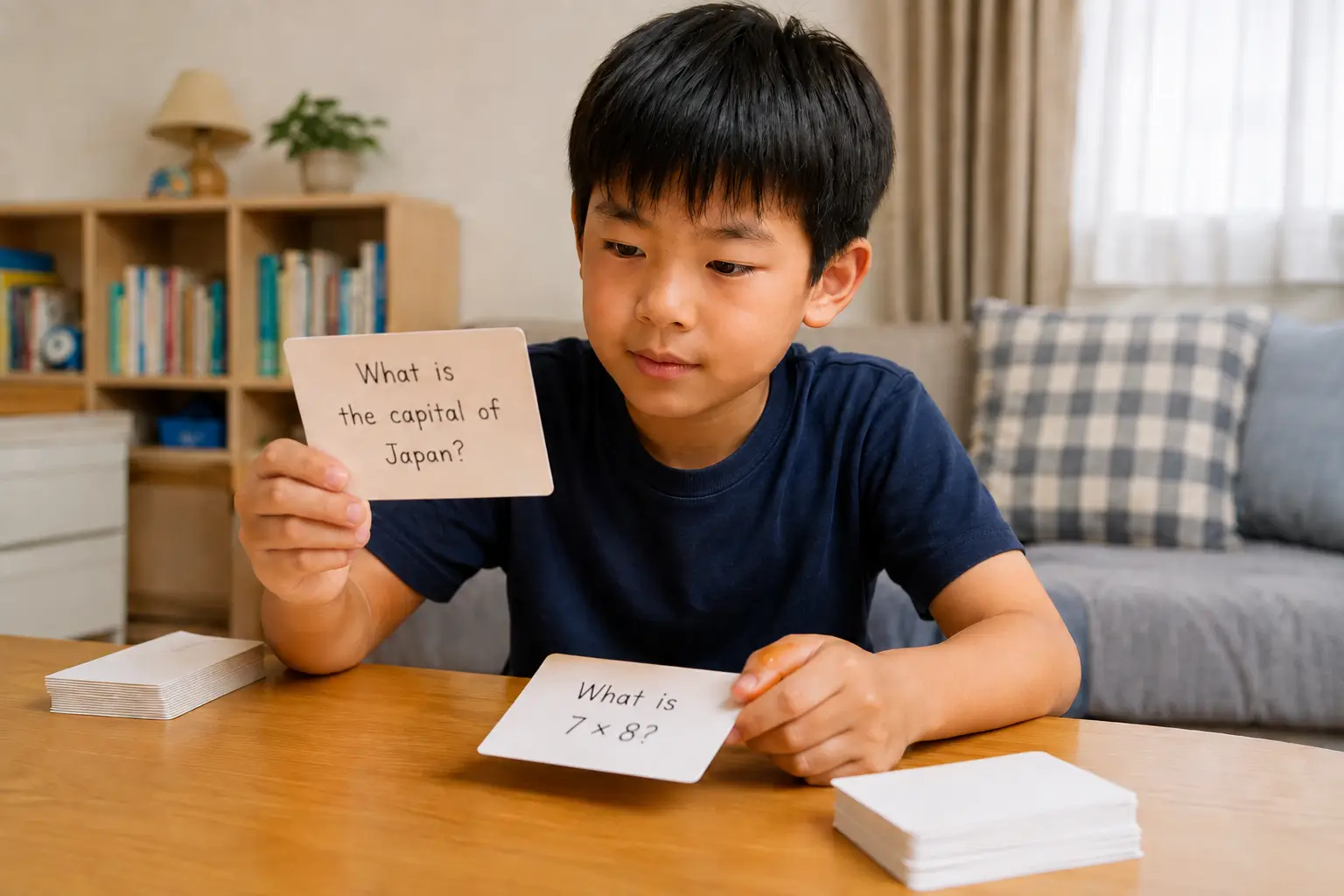
1. Turn studying into active practice
Instead of rereading your notes, try to answer a question in your head first, before checking whether you got it right.
This is called active recall, and it trains your brain to retrieve information the same way it will need to during the actual test.
Flashcards work well for this: one side holds the question, the other holds the correct answer, and then test yourself without peeking. Over time, you can write your own multiple choice questions about school topics to deepen your understanding and show where confusion usually appears.
Also, space out your study sessions using short, focused blocks. This “spaced practice” makes it easier to recognise key concepts and avoid mixing up similar answers in the exam.
In structured PSLE Maths Tuition lessons, teachers often turn key ideas into quick multiple choice practice so you get regular retrieval without feeling overwhelmed.
2. Practise with past papers and learn from mistakes
Practising with past exam papers and mock test questions, ideally under timed conditions, helps you get used to the pace of an actual multiple choice exam.
But the real value comes after the paper is done.
After marking the paper, don’t stop at “right or wrong”. Go through each incorrect answer and ask yourself why it was wrong:
- Did you misread a key word in the stem?
- Did you ignore negative words like “not” or “except”?
- Did you choose between two similar answers without checking which one truly fits the question?
Keeping a simple list of these patterns helps you notice which mistakes keep showing up, so you know exactly what to focus on next.
Programmes like our Problem Sums Masterclass build this habit by breaking down complex problems. They also help you reflect on what led to each mistake, so the same confusion doesn’t appear again in multiple choice form.
During the Exam
Once the exam starts, you need a clear process for managing your time and handling similar answer options, so you have a clear direction to follow and act with confidence rather than freezing up.

3. Plan your time with a two-pass approach
Before you start, quickly plan how much time to spend per question, based on the total number of questions and marks available.
The two-pass approach works well here:
- First pass: Answer every question you’re confident about, building momentum and securing easy marks early.
- Second pass: Return to the harder or trickier questions afterward, so you don’t spend too long stuck on one point.
Keep an eye on the room clock! If you find yourself spending too much time comparing two similar answers to one question, mark it lightly, move on, and come back in the second pass.
This keeps your focus on the questions where your knowledge can earn marks quickly.
4. Read the question stem before checking the options
Before looking at options, first read the question stem slowly and read carefully for key information.
A simple trick is to cover the options briefly and answer the question in your own words first so you don’t get distracted while trying to understand what the question wants.
Next, look for the option that best matches your understanding, rather than being swayed by an answer choice that merely sounds familiar.
While reading, underline key words, especially negative words like “not,” “except,” or “least,” which can flip the meaning of a question entirely.
This same close-reading skill is reinforced in Primary English Tuition, where students regularly practise picking out important clues and details before choosing an answer.
5. Use the process of elimination to narrow down your choices
When several answer choices seem possible, the process of elimination becomes crucial.
Try treating each option like a mini true/false statement: cross out any answer choices that are clearly incorrect or unrelated, then focus on the few that remain. This narrows the field and makes the right answers much easier to spot.
Watch out for absolute words like “always,” “never,” “all,” or “none” in answers and ask yourself: “Is this statement really true in every case?”
If two similar answers still look equally convincing, weigh them against the other options and check which one gives the most information while staying fully accurate — that’s usually the best answer.
As a rule of thumb, the correct option is the one that addresses every part of the question, not just one part of it. For science questions, this is where good concept understanding — from classes such as Primary Science Tuition — helps you quickly eliminate choices that don’t match basic facts.
6. Make an educated guess instead of leaving blanks
If there is no penalty for guessing, an educated guess always beats a blank — an empty answer guarantees no marks, while a guess has a real chance of being correct.
The key is to make that guess as informed as possible: eliminate any options that are obviously wrong first, then choose between what’s left based on which one best fits the question logically or grammatically.
It also helps to know that your first instinct is usually worth trusting, unless you spot a clear reason to change it, such as noticing a word that you missed the first time around.
Second-guessing every answer without good reasons often does more harm than good, so it’s worth knowing when to trust your thinking and move on to other questions.
7. Leave time to review and cross-check your answers
Leaving a few minutes at the end to review answers can prevent many avoidable mistakes.
During this review, look out for:
- Questions with negative wording (“not”, “except”) or absolute words that you might have misread.
- Any questions you skipped or marked for later in the two-pass process.
- Cases where the chosen answer doesn’t truly answer the question being asked.
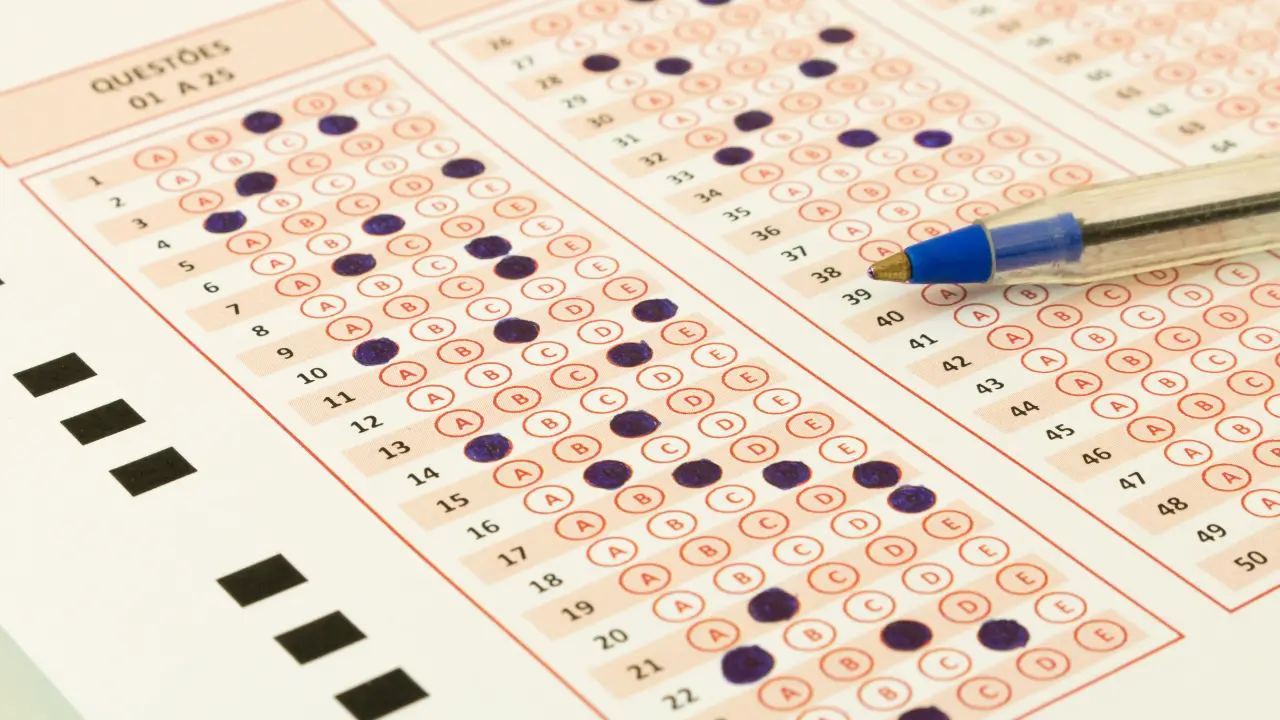
Also, cross-check the answer sheet: make sure every question has one answer clearly marked, no rows were skipped by accident, and the numbering still matches the question paper.
Only change an answer for a clear, specific reason — not simply a last-minute feeling of doubt!
After the Exam
Reviewing what went well and what went wrong matters as it helps you avoid repeating the same mistakes next term and strengthens your overall exam skills.

8. Review your incorrect answers and spot patterns
Once the results are back, take a moment to reflect on your incorrect answers and ask why each one went wrong — a misread sentence, a missed negative word, rushing, or a gap in understanding?
Keep a simple “exam reflection” page in your notes:
- List the types of questions you tend to miss (e.g. “questions with not/except”, “multi-step fraction questions”).
- Match each problem type with a strategy that could help next time (e.g. “underline negative words”, “break the question into step-by-step working”).
This kind of review turns every multiple choice exam into useful preparation material, helping you to adjust your approach and avoid repeating the same errors.
Many students find it more motivating to fix a few specific patterns than to simply aim to “do better.”
9. Strengthen your thinking skills between exams
Scoring well on multiple choice questions also relies on focus, memory, and flexible thinking, and these skills can be strengthened between exams, not just during the study season.
Here are some things you can do at home to promote thinking skills:
- Play strategy games like chess or Sudoku
- Pick up reading
- Solve common problems related to school subjects
- Engage in healthy, friendly debates
More particularly, our Brain Train Programme focuses on memory, attention, and reasoning so students can better manage long papers, stay focused across many questions, and avoid careless mistakes when faced with similar-looking options.
When thinking skills improve, exam strategies like careful reading and elimination become easier to apply consistently.
Practise Multiple Choice Strategies in Your Daily Study Routine

Treat these multiple choice exam strategies as habits you can use every week, not just on major exam days.
Start with one or two simple actions, such as underlining key words in every question or answering in your head before looking at options, and practise them during school quizzes and homework.
Once those feel natural, add the process of elimination, then time management, then a proper review routine. Over time, these small changes will build a stronger, calmer approach to multiple choice questions.
If you’re also getting stuck on how to solve word problems specifically, Math Heuristics: 7 Simple Strategies to Solve Problems Easily walks you through practical, step-by-step methods that pair well with the strategies covered here.
You’ll find more tips like these in our other posts on exam preparation across different primary school subjects!
Master Your Multiple Choice Strategies with The Nuggets Academy
You can start using these tips on your own, but it’s often easier to turn them into habits when you practice them regularly in a supportive environment where teachers apply them regularly.
At The Nuggets Academy, lessons are designed to build strong foundations in core subjects — Maths, English, and Science — while guiding students to use exam strategies consistently, so you feel more confident when facing tricky multiple choice questions.
Through regular practice, guided review, and small-group lessons, you get the chance to apply active recall, the process of elimination, time management, and answer-checking habits in a structured way, rather than figuring it all out alone.
Mistakes are treated as useful information rather than something to rush past, helping you genuinely understand where you need to adjust and improve.
If you’d like more support applying these strategies to your weekly learning routine, you (or your parents) can contact usto arrange a consultation or trial lesson!